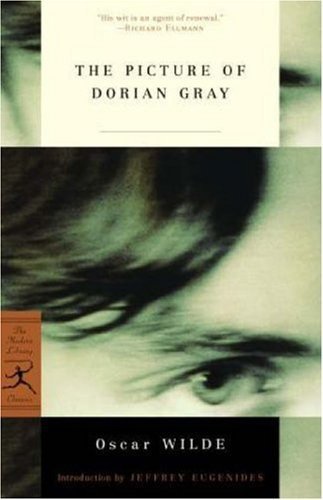
"How sad it is!" murmured Dorian Gray, with his eyes still fixed upon his own portrait. "How sad it is! I shall grow old, and horrible, and dreadful. But this picture will remain always young. It will never be older than this particular day of June....If it were only the other way! If it were I who was to be always young, and the picture that was to grow old! For that--for that--I would give everything! Yes, there is nothing in the whole world I would not give! I would give my soul for that!"
And it is with these immortal words that Oscar Wilde's only novel really takes off. Young Dorian is beautiful and unblemished by society; he is the friend of Basil Hallward, a brilliant (if somewhat dull) artist who is secretly harboring powerful feelings for him, and greatly desires to keep Dorian safe from the manipulations of society. Through a combination of influences (Basil's breathtaking portrait of Dorian and the corruption of their common friend Lord Henry Wotton), Dorian makes a wish that he would never age, and that the portrait would age instead. What he does not realize is that his plea will actually come true. The portrait ages, and displays upon the canvas the very contents of Dorian's corrupted soul.
If there ever was a book to startle a person into seriously considering their actions, The Picture of Dorian Gray would have to be pretty high on the list. And after reading it for the third time, I can honestly say that the powerful message has not been diminished. However, each reading provokes more and more questions, and of course, there is the ever-lingering question....How would you live your life if you knew that your sins would never affect your appearance? If your mouth would never be marred by harsh, cruel lines from sneers and scorn? If a certain hardness would never enter your clear, earnest eyes? Would you strive to live a good life, or would you plunge yourself into a life of debauchery and crime, because your sins would be printed on the canvas but not on your person?
In The League of Extraordinary Gentlemen, the character of Dorian is portrayed in a very different way. Instead of a corrupted young man whose very soul is imprinted on his portrait, Dorian is a suave gentleman whose physical appearance is not only unaffected by sin, but is also spared by the ravages of any physical abuse. Nothing can phase this guy....very cool, but the allegorical aspect of the story is totally lost.
Finally, I was curious to read this story again with full knowledge of the homosexual undertones in the story. If anything, it did not change my experience very much. It only cleared up a few points that were foggy to me before (ie. Basil's devotion to Dorian).
All in all, this was a wonderful book, and a delight to read again. For any of you who are following my LXG Reading Challenge, this is one you really should read :) It's a quick read, too, so even if you're too busy to read much, you could easily slip this into your schedule.