"Take no heed of her...She reads a lot of books."
~Jasper Fforde


Showing posts with label book review. Show all posts

Thursday, July 4, 2019

REVIEW: Wise Blood (Flannery O'Connor)

Please note: this review has been plucked directly from my Goodreads account.  There are some slight differences in formatting, but essentially everything else is going to be the same.  Since I can't do a "Spoiler" tag in the HTML here (which would have been AWESOME), I'm going to just tell you right off the bat that there are spoilers in this post.  I spoil the ending of Wise Blood, so if you don't want to know how it ends (and it's a shocker!) then please don't read any further.

Thanks!

-Emmy

*****
Wow...Um, okay....So, I have a lot of thoughts about this book.

For the first bit, I really didn't like it.  I must have read the first three to five pages again and again and again, because I just couldn't get into it.  But then, I started listening to it on audio.  The narrator, Bronson Pinchot, is not my favorite.  (I tried listening to his reading of The Alchemaster's Apprentice and it just sounded all wrong to my ears).  He was much better in this book--I really liked the voices he gave to Hazel, Encoh, and Onnie Jay Holy--but there were still a handful of times when I thought that he missed the author's intentions, or that the characterization was off.  For example, for some reason, even when she was supposed to be yelling and screaming, Sabbath's voice never seemed to rise above a whisper.

But, enough about the audio.  In terms of the book itself...well, I still have issues.  I'll admit, I was incredibly invested.  I found Hazel Motes to be a fascinating character.  And even though Enoch had his fair share of issues, I found that I really liked him, too.  Perhaps that's why the ending bothered me so much.

As I'm given to understand, Enoch's story ends with him stealing a gorilla suit and running off to his new life...as an ape?  Does he intend to travel around pretending to be Gonga?  Does he just want to live freely?  Will being a hand-shaking ape allow him to make more friends?  Is this his way of making the human connections that he was lacking?  I don't entirely understand.

But, it wasn't Enoch's end that bothered me.  It was Haze's.  First, there was that shockingly brutal scene where he murders the True Prophet.  I know he was scared that Shoats was replacing him, and that seeing his double freaked him out, but he straight up murders the man by driving over him a couple of times with his car!  The scene was so simple, so matter of fact that you have to remind yourself that something horrible has just happened.  That it's meant to shock, to horrify.

And then there's Hazel's fate.  When he takes the bucket of lime up to his room, I thought that he was going to chicken out like Hawkes did.  And when he doesn't, I just couldn't believe it.  But, it got worse.  He's got rocks and glass in his shoes, barbed wire wrapped around his waist, and he's literally dying in a ditch after his landlady tries to blackmail him into marrying her...and he's beaten to death by a cop!

I read those last few pages and then just sat there.  Just processing what I had read.  What was the point of all that?

I've been thinking about it for a couple of hours now, and I think I understand the meaning of the ending.  At least a little.  Haze spends the entire book trying to preach his "Church Without Christ", without success.  At the heart of it all, Hazel believes far more than he would like to admit.  And his vehement denial of Christ actually breaks him in the end.   The human heart is made to love and know God.  And O'Connor's deeply Catholic message here is that the denial of God, which is in turn a denial of the most deep and abiding human part of us, is ultimately self-destructive.  The rocks and barbed wire and punishments; Hazel is trying to repent for something he can't even bring himself to acknowledge as a sin.  But, in the end, it's too much for him and he dies under the wight of his own denial.

The more I think about this book, the more conflicted I get.  And perhaps that's the point.  Perhaps we're supposed to think about this story long after we finish.  And I know I have a lot to think about.  Hazel Motes will be lingering in my mind for a long time to come.

Friday, August 5, 2016

100 CC #1: Tortilla Flat (John Steinbeck)

When I was in high school, John Steinbeck was my favorite writer.  Rereading Tortilla Flat after all these years has reminded me why.  When it comes to books, there are those that you read, those that you experience, and those that you climb into and live in for a while.  Steinbeck's short novels have always had that effect on me.  In particular, it is those novellas that focus on a group or a small town that really had the most profound effect, especially Cannery Row, Sweet Thursday, and of course Tortilla Flat.

This is the story of Danny and his friends, a group of paisanos, which Google tells me is a group of Spanish or Italian peasants.  Growing up, I always looked at them as poor Mexican/American immigrants, so I guess I was a bit close.  Basically, they are a group of poor ruffians who go on adventures, stealing wine and chasing women until they accidentally draft themselves into the war in a drunken fit of courage.  Upon returning, Danny, who becomes the leader, learns that his grandfather has died and left him an inheritance: two houses.  In a social circle where no one else has a house, let alone two, this is a huge boon for Danny, but his friends worry that it will make him distant and aloof.  But, instead, this newfound property draws to it a ragtag group of characters, including righteous Pilon, clever Pablo, and the humanitarian Jesus Maria.

Despite taking place in 1930s California, this story is a retelling of the exploits of Arthur and his knights.  Our heroes go on adventures, feed the hungry and shelter the homeless.  They give offerings to the saints and punish scoundrels and cheats.  It is a beautiful, romanticized story of a group of men just living out their lives.  I have two quotes which I think apply here.  One came from the back of my copy and is attributed to William Rose Benet: 

The extraordinary humors of these curiously childlike natives are presented with a masterly touch.  These silly bravos are always about to do something nice for each other, their hearts are soft and easily touched: and yet almost absentmindedly they live with atrocious disregard for scruple.

And this second comes not from Tortilla Flat, but from another Steinbeck favorite, Cannery Row:

Its inhabitants are, as the man once said, “whores, pimps, gamblers, and sons of bitches,” by which he meant Everybody. Had the man looked through another peephole he might have said, “Saints and angels and martyrs and holy men,” and he would have meant the same thing.

This is one of my favorite books, and for good reason.  It captures an essential glimpse of humanity, and romanticizes it so that each character becomes more than himself, larger than life.  It's hard to really capture the essence of Steinbeck in a review like this, not if you really experience him the way I do.  That's not meant to sound pretentious.  I'm just saying that my experience is hard to put into words ;)  If you're looking for something to read, and would like to try Steinbeck, this is a great place to start.  But, be warned: this is not a book that can be read fast.  It must first be experienced and savored, like a fine wine or a rich dessert.  Never rush Steinbeck.  You'll miss out on so much.

Thursday, July 28, 2016

100 Classics Challenge

So, I know it has been a little while since I've posted, but I'm excited to announce a new reading challenge!  I'm finding that my summer reading theme of "professional fan-fiction" is just not working for me right now...because I'm finding that I would rather read the classics which inspired these books than the adaptations.  So, I had an idea.  What if I just read the classics and skipped the rewrites?  So, I decided to do that instead.  But, summer is almost over, with just about a month left.  So, again, I had an idea.  This challenge, which I'm calling the 100 Classics Challenge (or 100 CC for short) is going to be an ongoing program, starting now and going until I finish (few months?  few years?  Who knows?).  I'm not going to read just classics in the time it takes me to finish, but when I do read one, I'll include a review of it here.

As always, if you would like to follow along, please feel free to do so.  Also, feel free to suggest titles in the comments.  And if you want to participate on your own blog, let me know so I can see what classics you're reading!

As for what makes a classic, here's what I'm going off of.  These are the books that are still be published today, even if they were written twenty, thirty, or even 100 years ago.  This means no "modern" classics.  I'm not going to be reading Harry Potter, for example, but I might pick up Ragtime, since it's more of a "classic".  Titles like Silas Marner, David Copperfield, and Frankenstein are all fair game, as are more obscure books by writers of classics, like some of the lesser known works of PG Wodehouse or GK Chesterton.  For more ideas of what I'm going for, feel free to ask, or check out this guide by Italo Calvino.

As for what I'm reading right now, it's not a classic, per se, so I won't be posting right away.  But, I'm excited to start a new reading challenge and share this with all of you.  Hope you'll join in the fun!  Happy reading :)


Tuesday, June 28, 2016

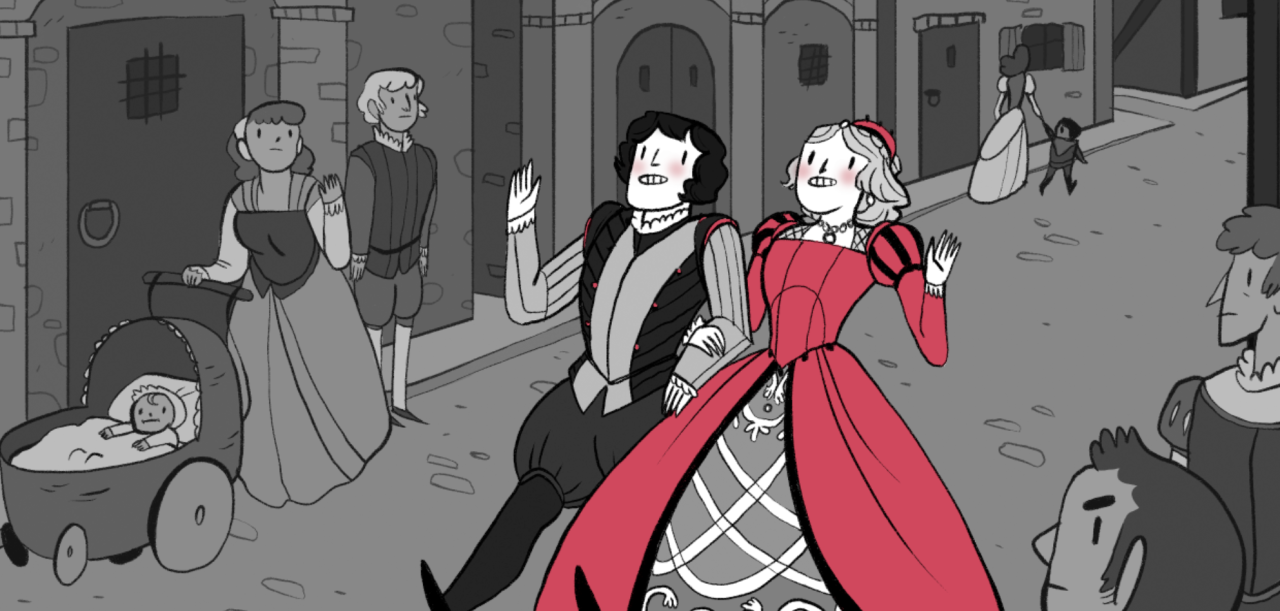
SR 2016: Romeo and/or Juliet (Ryan North)

Romeo and Juliet is one of those classic plays that most students have to read for a literature class at some point in their academic careers.  In my case, I've read it twice--once in junior high, and again as a freshman in high school.  It's a good play, of course, being Shakespeare, but if there was one thing I would say it was missing, that would be the opportunity to make your own decisions instead of being forced to watch two hormonal teenagers act out the tragic path that fate has in store for them.  So, of course, when I found out there was a Choose-Your-Own-Adventure equivalent of Romeo and Juliet, I jumped at the chance to read it.

*N.B. This book takes a really long time to read, since you have so many options to choose from, and so many endings to find.  With that in mind, I'm actually writing up this review before I complete the book, but I've found at least 10 different endings so far, so I think I'm qualified to start writing about it now.


Anyways, back to the review.  This is a hilarious book that really takes a classic tale and turns it on its head.  Whether you liked the Bard's original or not, this is a really funny book.  So, you know the story: two teens meet at a party and fall in love.  Even though their parents are enemies, the two get married, plan to tell everyone later, and then things go to hell in an handbasket and they both die.  What a lovely story!

Well, Ryan North's version is a little different.  In this tale, you can play as either Romeo or Juliet (as well as other unlockable characters) and try to live out your perfect love story.  Romeo is what you'd expect: he's a love-sick puppy who makes horrible choices and really loves brunch.  Juliet on the other hand, is a muscle-bound bodybuilder whose hobbies all involve boys and muscles.  So, pretty much what you would expect here, too.


So, basically, just like those choose your own adventures that we read as kids, you get to make choices for each character and try to find the most happy ending.  Some of the more interesting subplots involve Romeo's encounter with a creepy librarian, and Juliet's decision to kill or not kill the fiance her parents arranged for her.

And without giving away too much, some of the endings involve lions, getting chased by a naked man with 30 swords, and literally becoming a glove.  Some of the plotlines will make your laugh until you cry, and as for the others, well, the last thing you could call them is boring.

Oh, and did I mention the illustrations?  Yeah...those are amazing!  And each one is by a different artist :)


I'm be trying to finish this up over the next few days so I can post about it on Goodreads.  But, in the meantime, this is one down for my Summer Reading 2016 experience!

Sunday, May 24, 2015

English as She is Spoke (Pedro Carolino)

I'm learning Japanese.  (私 は 少し 日本語 を はなします).  I'm no expert, and don't consider myself to be one.  Mostly, I can say basic sentences, and spout out some vocab.  Even that does not make a ton of sense.  I can say that I speak Japanese or English ( は にほんご を はなします; は 英語 を はなします), words like awesome, apple, and rice (すごい; りんご; ご飯) and make simple sentences that make little sense (私 は おいしです ご飯)--> I am delicious rice.

Sometimes, things get lost in translation.  And even while using online translators, such as Google translate (which helped form the Japanese characters for me) things often get screwed up. How many of you (and I'm sure it's most of you) have tried putting something into Google translate, filter it through a few languages, and set it back to English?  Usually what comes out is somewhat garbled, but generally intelligible.  I had tried it myself a few years ago, and posted the results on this blog.  It makes for an interesting way to spend a rainy afternoon.

Of course, because of its shortcomings, people generally use Google Translate knowing that this is not going to be a perfect translation.  And we certainly don't think that this is good and proper English.  But, what if someone had really butchered a translation and people believed that it was legitimate?  Well, that's what happened with my most recent read: English as She is Spoke.  What happened was a well-intentioned Portuguese man wanted to create an Portuguese to English phrasebook.  But, he didn't know any English and didn't have a Portuguese to English dictionary.  Rather, he had a Portuguese to French dictionary and a French to English phrasebook.  English as She is Spoke is the results of his careful translations.  Some of it makes sense, most is pretty garbled, and there are passages that mean nothing at all: "After the paunch comes the dance" or "To craunch the marmoset".

I felt bad for laughing, since it was obvious someone put a lot of time and effort into writing this book.  But, in all honesty, there is only one reason its still being published over 100 years later.  And that's because it is so funny!  As a textbook, it is no longer valid.  But, as a piece of entertainment, it's a real hoot!  If you're interested in language, then you should check this out.  But, also, you should check it out just because it's fun to read.

I have an additional treat for all you, too.  If you are interested in reading this book right away, you can check it out online at this link here.  This is a pretty fancy digital copy of the text, so it should be a lot of fun to explore!  I wish I had known it was online, so I wouldn't have had to use the library copy (which was mysteriously sticky--ewwww).

As always, happy reading!

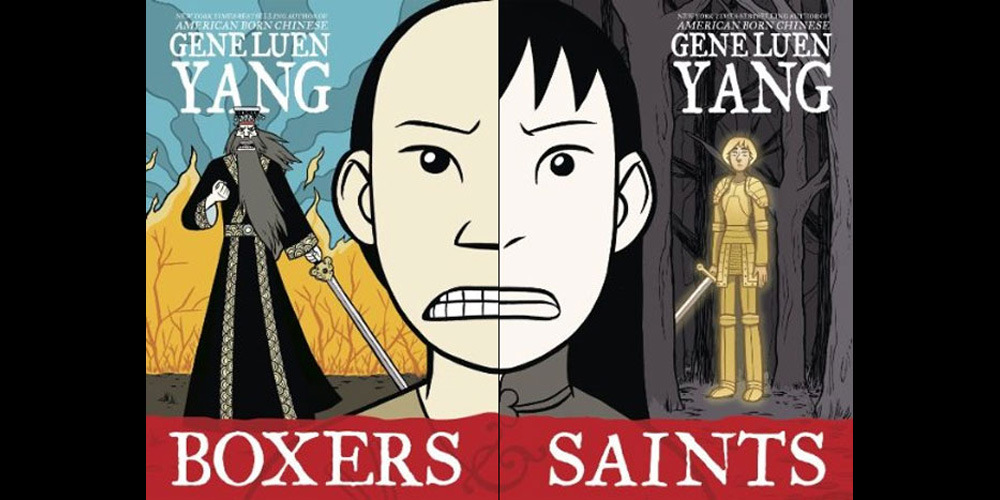
Boxers and Saints (Gene Luen Yang)

So, this post is actually covering two books by Gene Luen Yang: Boxers and Saints.  As I'm writing this, I have just finished Saints, and I'm not entirely sure how I feel about things.  This duo of books presents a story from two opposing viewpoints, leaving the reader to determine for themselves which side is right.  See, the story takes place during China's Boxer Rebellion, when the native Chinese rebelled against foreign invaders, including Christian missionaries.  Boxers is told by the young man who leads the rebellion.  Saints is told by a Chinese girl who converts to Christianity.

I'm very open about being Catholic.  I don't run around telling people for no good reason, but
if someone asks, or it comes up in conversation, I'm happy to tell people about my faith.  But, even so, I found this a difficult book series to read, not because I hated it, but because I was not sure who to side with.  When you read Boxers, it is obviously painting the Christians as evil, "foreign devils".  But, at the same time, Saints redeems the Christian image.  It was a very powerful read.

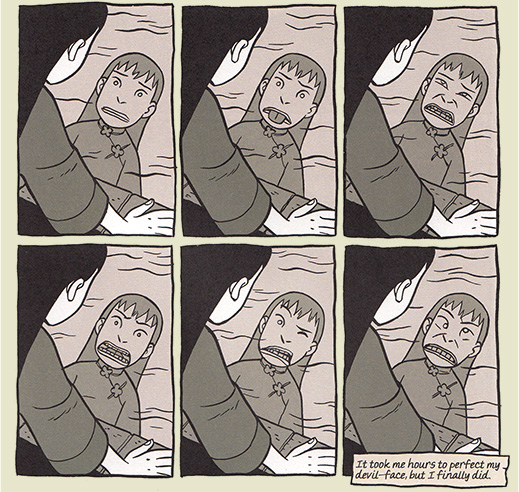
I liked each book for different reasons.  Boxers, hands down, had the cooler storyline.  I mean, with their homeland being invaded and their culture destroyed, a group of Chinese nobodies join forces and under the influence of a sacred ritual, become the living embodiment of their gods.  The art style was amazing, and each god's costume was beautifully and intricately designed.  The battle scenes drew you in and left you breathless as you waited to see what the outcome would be.  Saints was a story of faith and second chances.  While Bao was confident in his gods and his rituals, Vibiana struggles with her faith.  It's not a preachy "I'll be Christian!" story, but it shows the real struggles of being a religious minority in a time of persecution.  While Saints was not as visually pleasing as Boxers, the story was, in my opinion, deeper and richer.  I wish that it was a little bit longer.

All in all, this was a great series.  And I highly recommend it to any of you with an interest in history, religion, or China.

Tuesday, May 19, 2015

Anya's Ghost (Vera Brosgol)

I'm actually reading at a pretty steady clip right now.  I'm happy to report that Summer Reading 2015 is off to a good start.  At least until classes get underway.  Then we'll see how I'm doing, I suppose.

But, for right now, let's talk about my next read: Anya's Ghost by Vera Brosgol.  This is a graphic novel story of a high school girl (Anya) who is struggling to fit in with her classmates because her Russian immigrant mother keeps pulling her back into her heritage, encouraging her to attend Russian Orthodox mass and become friends with nerdy little Dima, who is also from Russia.  But, instead, she's something of a loner, smoking cigarettes behind the principal's back with her friend Siobhan, and wishing the cute guy in her class would notice her.  All this changes when she finds herself taking an alternate route home from school and ends up tumbling into a well.  She's not the only one there, either.  There are the skeletal remains of a young girl, about her age.  And the ghost of that girl is still down there.  Ninety years is a long time to be alone, and she's eager to
have found a new friend, although Anya's not so keen on being pals.  Still, when Anya leaves the well, she finds that this ghost is going to be a bit harder to lose.  But, that might not be a bad thing...or is it?

This is a sort of spooky tale.  It's a ghost story, after all.  And of course, this is one of those stories that I really can't say much about for fear of spoilers, so I ask that you bear with my vague descriptions.  But, if you're interested in paranormal stories, ghosts, mysteries, or comics, this is something you might enjoy.  Also, I recommend this to anyone who has ever felt like the outsider or been unlucky in love.

Since this was a graphic novel, I did want to comment on the art style.  I really liked the character design, and I thought the art was wonderful!  The characters were emotional and expressive and popped off the page.  The art actually reminded me somewhat of the art of Bryan Lee O'Malley, who writes the Scott Pilgrim books.  Obviously not the same, but it made me think of it.

Well, I have a whole stack of books lined up for continued reading.  I hope you'll stop in again to see what else I'm reading this summer.  In the meantime, I'm reading about management for a Library Science class....Bleah.
But, still, there is a lot of good stuff out there.  I'm looking forward to sharing my samplings of it with all of you.  And tell me what you're reading to!  As always, Happy Reading! ~em

Sunday, May 17, 2015

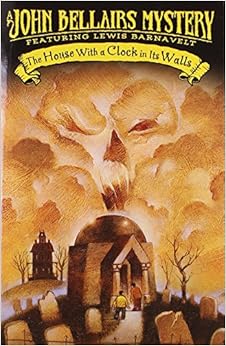
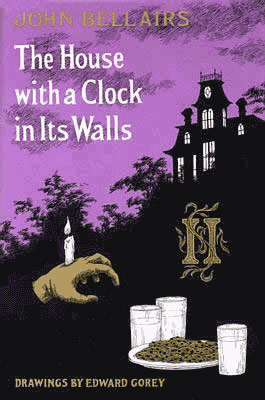
The House With a Clock in Its Walls (John Bellairs)

This is a book that I've been meaning to read for about ten years now.  Back when I was in grade school, Sarah had suggested that I pick up this series she had been reading.  I was told to read anything by John Bellairs or Brad Strickland (the series was started by the former, and continued by the latter after his death).  I'm not entirely sure why I never actually read any of them.  But, I do know fantasy was not my thing at the time.  It is now.  I mean, I love fantasy.  And I know that Sarah enjoyed it as a kid.  But, at the time, it just seemed rather silly to me, and I just was not interested.

I had been thinking about the series on and off for years
though.  It was one of those things that I thought could actually have been really interesting if I had given it half a chance.  Since I started working at the library, I've read some children's literature (know your collection!) and I started thinking that if I'm reading Timmy Failure and Howl's Moving Castle, the least I could do was give John Bellairs a shot.

I should pause my review at this point to say that John Bellairs has written three different series.  And I just happened to pick the Lewis Barnavelt books because I could only remember the title of one book by Bellairs: The Beast Under the Wizard's Bridge, which according to Goodreads is Book #8 in the series.

But, of course all series must be read in order.  Book #1, The House With a Clock in Its Walls tells the story of Lewis, an orphan who is sent to live with his uncle Jonathan after his parents die in a car crash.  (On a side note, it has always interested me that these characters are perfectly peachy after the crushing death of a loved one if they meet a cool relative or make some good friends right afterwards).  Lewis finds himself fitting in perfectly with Uncle Jonathan and his friend Mrs. Zimmerman.  And to his great surprise, he learns that they are both wizards!  Not only that, but there is some crazy magic afoot.  In the silence of the night, you can hear a clock ticking away within the walls of the house.  And no matter where you are, you can hear it as though it were on the other side of the wall.  The clock serves a sinister purpose, but no one knows what it does.   Perhaps it has something to do with the previous inhabitants of the house: an evil warlock and his wife.

This is essentially your classic Gothic novel watered down for children.  Like a virgin margarita, this is a treat that can be enjoyed by both adults and children.  I certainly found it fun.  It was atmospheric, suspenseful, and like all good children's fiction, leaves the reader with the satisfaction that no matter what happens during the beginning and middle, all will be right in the end.  Of course, there are still signs that this was written for children.  Jonathan and Mrs. Zimmerman like to insult each other, and their nicknames border on the childish.  The story never gets too scary, either.  This is just right for a kid who wants to get into the more Gothic aspects of fantasy, without diving into The Phantom of the Opera or Jane Eyre.

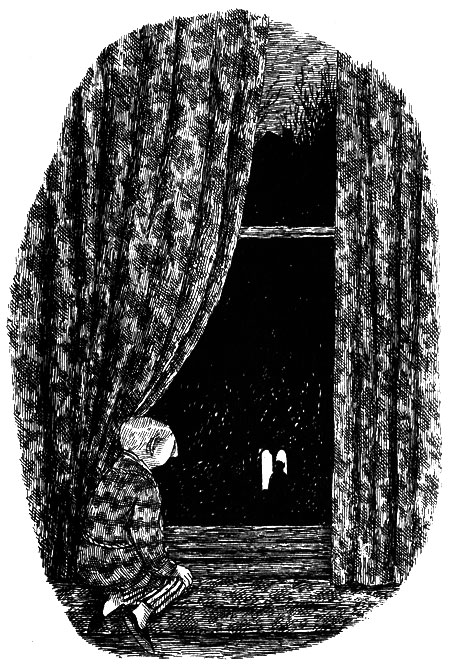
Oh, and did I mention the illustrations are done by Edward Gorey?  Because they are--and that is AWESOME!

The rest of the series has awesome titles and covers.  Even this book has multiple covers and they all look great.  I'm looking forward to reading the rest of the series, and books 2-3 are in my room right now.  So, stay tuned for more reviews!  And as always, happy reading :)

Tuesday, May 12, 2015

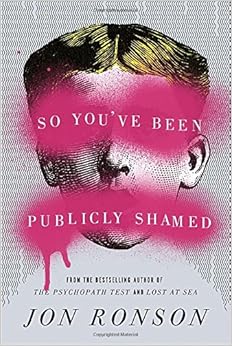
So You've Been Publicly Shamed (Jon Ronson)

As many of my readers (who are bloggers themselves) might know, the world of the internet is a great way to share your thoughts and opinions.  But, it is also a great soul-sucking void where your life can be ruined in an instant if you do something stupid.  I'm thinking about the people who post drunk party picks on Facebook and then can't get a job, or anyone who gets majorly shamed by the internet for posting something disrespectful or rude.  I've had my friends shame me for comments (mostly political stuff on FB about something they did not agree with).

But, that's what this book is about.  What happens when you're the person who posts that inappropriate comment online?  And everyone freaks out on you?  I mean, we believe that we're being noble.  By calling out that person who claimed that we should [insert terrible thing here], we are standing up for truth, justice, and human rights.  Right?  I mean, we're the good guys here... right?

Of course, it's not all that clear cut.  But, when it comes to public shaming, there is a fine line between telling someone they're wrong and completely destroying them.  That's the topic explored in Jon Ronson's newest book So You've Been Publicly Shamed.  Now, this was a legitimately good book.  It brought up a concept that we don't normally think about, and forced us to sit back and reconsider our actions.  This is especially important online, since we are often anonymous, and we are legion.  We have the safety of the crowd.

If you're interested in sociology, or what happens when a comment is made online, what the end results of our actions can be, then I suggest checking out this book.  It was very informative, and I enjoyed reading it.  Of course, fair warning: some of the stories are hard to read, not because they are graphic, but because it can be depressing to see someone put through the wringer like that.  Still, I gave it a three of five on Goodreads, so I suppose that's a start!

Sunday, May 10, 2015

Her Death of Cold (Ralph McInerny)

Hello, all!  As promised, here is the first of what I hope will be a very productive summer of books.  To get the ball rolling, let's start with my first official summer read: Her Death of Cold by Ralph McInerny.  

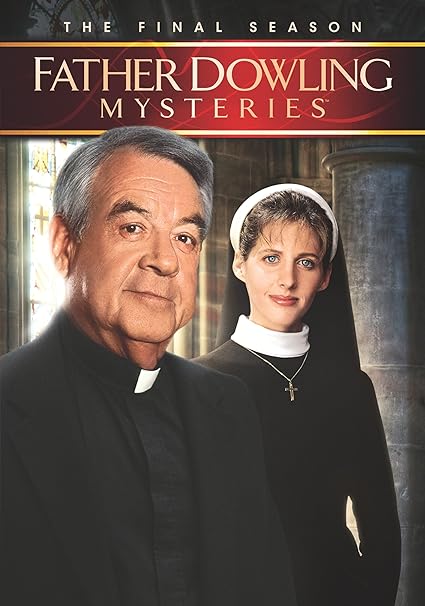
This is the first book of The Father Dowling mysteries.  This is a series of books that follows the adventures of a Catholic priest, Fr. Dowling, who is pastor of a sleepy little town in the Midwest.  It starts off with a call in the middle of the night.  One of Fr. Dowling's elderly parishioners calls him in a panic, saying that she's afraid that her children are going to murder her.  They hate her and are only interested in her vast family fortune.  She concludes by telling him that she's afraid to live alone, afraid of death and of dying, and of what comes after that.  He advises her to pray and get some rest.  She does, and appears better afterwards.  Then, she disappears.  Her family is concerned and they try to figure out where she went.  Then, she turns up back in her house.  The doors are unlocked, she has a fatal wound on the back of her head, and her body appears to be thawed, as though someone had frozen her and then warmed her up again.  The police are at a loss as to what happened, and as the chief detective shares his frustrations with his friend (who just happens to be Fr. Dowling), more and more clues crop up.  And the mystery just gets stranger and stranger.

This was a good read.  Four out of five stars on Goodreads and a high expectation for the rest
of the series.  I liked that it was not just a cut and dry answer.  The mystery took a bit of unpacking, but once it did, it wasn't so convoluted that it was unreasonable.  It made pretty good sense to me.  That's what I want in a mystery: a solution that I couldn't guess, but that still makes perfect sense.  My only complaint was that there were a few dry patches, or too many characters were introduced at once and I had trouble recalling names.  But, that's more of my issue than the author's.

Since the central character is a priest, there is going to be some dogma, but like the Father Brown books by GK Chesterton, it never felt forced.  I actually really liked how the concepts of sin and crime were approached when viewed through a Catholic lens, and how even though he should be the poster boy for good Catholic behavior, we see that Father Dowling is not perfect.  Of course, he's no schmuck, but he's not a holier-than-thou saintly figure.  He's a man, just like anyone else.  He has his positive traits and flaws.  It made him feel more real to me.

I picked up the second book in the series (The Seventh Station) at the library, so be on the lookout for that review in the coming weeks!  Oh, and there was a TV series, so I'll be looking into that as well!

Monday, May 4, 2015

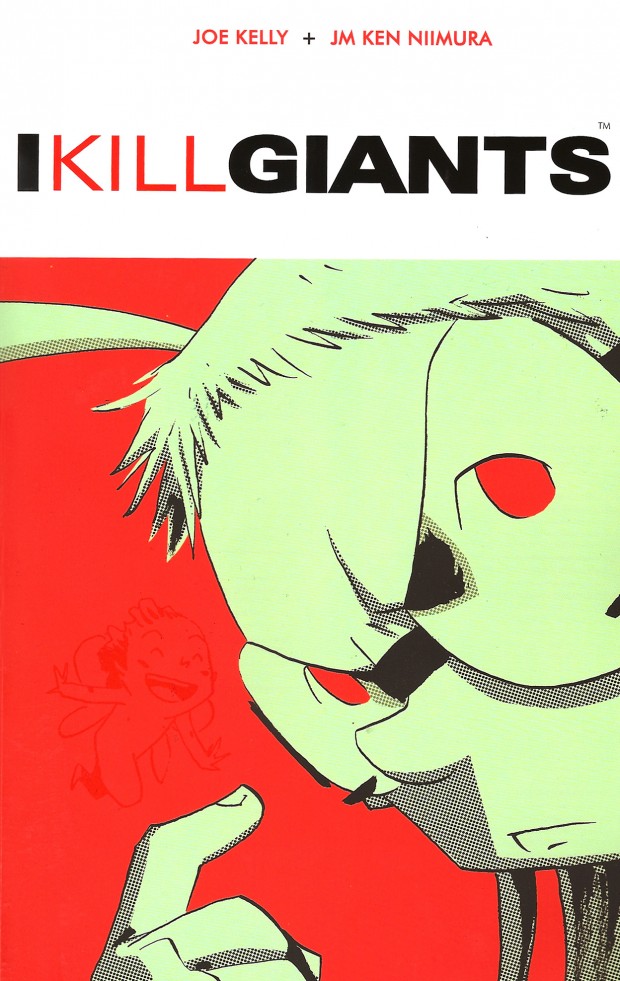
I Kill Giants (Joe Kelly)

Confession time: when I was a kid, I sort of lived in my head.  I was imaginative, quiet, and always working up a new story or some adventure to daydream about.  I was that kid who would get called out by the teacher not for talking too much or acting out, but because I was staring out the window, thinking about what Pokemon I would want to take with me on my quest to become the Pokemon master, or what it would be like if I, like so many of the books I read as a kid, could go to some fantasy world and find all manner of strange and wonderful creatures and new friends.

Even now, at 24, I can still appreciate that part of child me.  Sure, I don't think that I'll be able to walk through a closet and end up in Narnia, but sometimes, I still think about what it would be like to go on an adventure, meet all manner of strange and wonderful creatures, and together fight off some great evil and save the world.  Or, more realistically, I would love to go backpacking across New Zealand, and meet some wonderful people who would remain close friends for the rest of our lives.

When I first picked up this book, I was looking for a simple fantasy story, but instead I found a deep and touching tale of growing up, coming of age, and dealing with the pain and suffering of life.  Let's be honest here: life is not always easy, but some of us have it easier than others.  For me, childhood had a lot of ups and down.  As a kid, I was very happy.  I was active, got along well with boys, and had a lot of fun.  When I got to be about 10 or so, I started having friend troubles, as girls do, because my classmates were getting into cliches.  And by the time I was in seventh or eighth grade, it had graduated from cliches to bullying.  There were years that I struggled because I was bullied to the point where I had no self-esteem.  For those of you who have never experienced it, there is no way to explain it.  It is the worst thing I have ever experienced, and I would never wish it on anyone.
Anyways, on to the book.  I think what attracted me to this book once I stared reading was the fact that I could see so much of myself in Barbara.  Here, we have a young girl who certainly stands out in her class.  She's quirky, she's odd, and she doesn't care.  When questioned, she claims that she kills giants, but this is all just a cover for coping with issues at home.  She's a smart kid, but you can see that she is struggling through something.  But, instead of making this an obviously mopey piece, in the hands of Joe Kelly, this becomes an amazing story full of heart and imagination.  It was incredibly engaging and difficult to put down.  We want to cheer on Barbara through her struggles, even though she makes herself somewhat unlikable.  But, she's a kid with a lot of emotions all bottled up inside, and like all of us, just wants to be loved and accepted.

The start is a bit slow, so make sure you give it some time to get involved.  And then, toward the end, there is some shocking stuff.  I'm not going to say anything more, but you don't want to miss out on this!  A great collaboration of drama, magical realism, and fantasy, this book is sure to blow you away!  Not gonna lie: there were a few parts where I got pretty choked up.  Which is saying something, since I generally try to be as emotionless as Mr. Spock, haha!  But, seriously--go and read this!  You'll be so glad you did!  And once you read it, come back and tell me what you thought about it!

Monday, June 16, 2014

The Weed That Strings the Hangman's Bag (Alan Bradley)

Summer mysteries are well under way.  I've officially finished the second Flavia de Luce book mere minutes before writing this.  This is a wonderful series.  I can't wait to get my hands on book 3 (A Red Herring Without Mustard).  But, for now, let's just focus on book 2: The Weed that Strings the Hangman's Bag.  First, I have to say Mr. Bradley has the most interesting titles for books!
  • The Sweetness at the Bottom of the Pie
  • The Weed that Strings the Hangman's Bag
  • Red Herring Without Mustard
  • I am Half-Sick of Shadows
  • Speaking from Among the Bones
  • The Dead in Their Vaulted Arches
  • As Chimney Sweepers Come to Dust (Not yet published)
I thought this book was delightfully unsettling.  What I like about this series (from the two books I've read) is that while the deaths are certainly unsettling, they are never graphic or disturbing.  This is a classic cozy mystery, where you can close the book at any time and go right to sleep, instead of staring up at the ceiling thinking about the grisly details.  While in book 1, Flavia, our precocious 11-year old chemist, finds a dying man in the garden, this time he falls right onto the stage during a puppet show being put on in the parish hall.  And there is a whole delicious list of characters and suspects.  Who would have killed Rupert Porson, the puppeteer?  Could it have been his pregnant traveling companion, tired of his abuse or his wandering eye?  Or was it the mad woman who lives in the forest, who shouted that the devil was dead when Rupert came crashing down onto the stage?  Or perhaps the German POW who lives on one of the local farms and has a bit of shared history with him?
 
It was a fun book.  Sure, it was perhaps not as good as the first one, but I really enjoyed it.  I just love the main protagonist, Flavia.  She's clever, cute, and feels so original.  As a kid, I think this is the sort of person I would have loved to hang out with; she's smart and adventurous.  Plus, she's got a heart of gold (when she's not plotting revenge on her sisters, who can be rather cruel to her).
 
I feel like there is more that I should be saying about this book, but I'm afraid if I do, I'll be giving away plot points.  And besides, all my gushing about how wonderful Flavia is was taken care of in my previous post about this wonderful little detective.  As for my next read, I think I'll be deviating from the mysteries yet again.  I'm currently also reading the Discworld series by Terry Pratchett, and once I get a few more of those under my belt, I'll be writing up a post about the series (or at least a small portion of the series.  There are literally 40 books so far.  I've read 2.)
 
I've got a few other interesting books lined up.  Perhaps one of the most interesting is a little gift I received in the mail today from The Roomie, whom I have not been in contact with for months.  A book of library/librarian stories is pretty much the best thing ever to find sitting on the kitchen table after coming home from a particularly busy day at work.   I can't wait to start reading!  (Thanks, hun!)

Thursday, June 12, 2014

Arsène Lupin, Gentleman Thief (Maurice LeBlanc)

Those who know me well enough know that I'm a huge fan of the anime Lupin III by Monkey Punch (as well as the manga that inspired it, although it's really not as good).  And one day, while I was on a total Lupin III kick, I happened to stumble upon an interesting little fact on the Internet: Lupin III (or "Rupan sansei" as he's known in Japan) is based off a French book series by Maurice LeBlanc about a gentleman thief-turned-detective named Arsène Lupin.  (He's called Rupan in Japan in order to skirt around a copyright issue that originally prevented them from using the name Lupin.  Not that it mattered to them, since there is no "L" sound in Japanese, and they were already pronouncing it with an "R" sound anyway).  Already a fan of the famous anime criminal, I thought it might be fun to go back and read the book that inspired it all.  And that's how I ended up reading Arsène Lupin: Gentleman Thief this summer.  It also helped, of course, that the book fit into my theme of summer mysteries.  

This was a great book!  I honestly wasn't sure what to expect.  After all, I had fallen for Lupin the THIRD, the young, brash, and completely charming GRANDSON.  And sure, he was based off of the LeBlanc character, but that didn't mean that they were going to be the same.  And I'll be honest; they weren't the same.  But, despite this, they were both VERY good.  I really loved this original incarnation of Lupin.  He was funny, clever, charming, and had a sort of confident, mature bearing to him that Lupin III lacks.  While his "grandson" is cocky, over-confident, and pretty lusty, the original Lupin is much more of a romantic.  He does things not so much for the money or the sex, but because it's a charming or romanticized adventure.  It's like Robin Hood: robbing the rich and saving fair maidens.  Whether or not the whole thing is actually like this is up for debate, but this is certainly how Lupin sees it.

More than anything, these stories actually reminded me a lot of the Lupin seen in the Hayao Miyazaki Lupin III film The Castle of Cagliostro which quickly became one of my all-time favorite films as soon as I had seen it.  In this movie, Lupin III seems more mature.  He's not interested in all the ladies and the money; in fact, I don't think he makes any sex jokes at all (as contrasted to his other movies, which has him ogling breasts, chasing pretty girls, or attempting to seduce his on-again/off-again girlfriend Fujiko Mine).  His focus is on righting wrongs and saving a damsel in distress.  And in this book, that's what Lupin focuses on, too.  Sure, he plays some tricks and steals some things.  He even goes up against the greatest detective in literature: Sherlock Holmes.  But, he's not all about childish excitement.  He's more purposeful.  And it made for some great, fun stories with lots of drama and mystery.  I think my favorite was actually the final story: "The Sign of Mercury," which was almost completely over-the-top at times, but it was just so much fun that I didn't even care!

If you read any of the books I suggest this summer, this is one you just have to check out!  And I highly recommend that while you're at it, you give the anime a shot, too.  (A side note, some of the movies are rather bland, and might give you a bad introduction to the series.  Start with Castle of Cagliostro or Lupin III Series 2.)  But, read this book first.  Seriously.  Go read it.

Tuesday, June 3, 2014

The Bad, the Good, and the Down-Right Amazing

"Miss Emmy?"
"Yes, Watson?"
"What are all these books?"
"Well, those are books I just read."
"Yes, but, as far as I can tell, none of these are mysteries.  Isn't mystery your theme this summer?"
"That is correct, doctor.  That's what happens when you work in a library and new and interesting books are constantly falling into your lap.  You take them home and you read them."
"And what are you going to do now?"
"Elementary, my dear Watson!  I'm going to review them!"

*****
And, that's pretty much what happened.  I went to work, I found lots of books (mostly chemistry, but I haven't read those yet) and I sat down to start reading, even though many of them weren't mysteries (mostly because they were coming due).  What can I say?  I'm a sucker when it comes to books!

First in this motley lineup is David Sedaris's Squirrel Seeks Chipmunk.  I've heard some great things about this author, so I was really excited to check it out.  But, I'll be honest, I was terribly disappointed.  The stories were actually pretty depressing, and the characters were really full of themselves.  By the time I finished reading (it was a short book, so I managed to choke it down), I was feeling a bit bleak about stuff in general.  I'm sure his other stuff is funny, but I just wasn't feeling it with this book.  One positive, though: the illustrations were pretty fun.  (I mean, some of them were gross, but I did like the artist's style.)

The next book was far more enjoyable, and actually
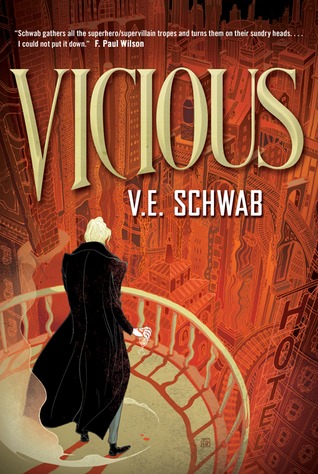
should probably get it's own post, but I'm just not feeling up to it right now.  This was Vicious by Victoria Schwab, a twisted Sci-Fi novel about two friends, turned enemies, after their thesis studies on near-death experiences and super-human abilities goes horribly wrong.  It was a fast-paced read, and constantly kept my attention.  I really enjoyed reading it.  I think the best part is that for most of the book, you really don't know who to side with.  Clearly, both protagonists are nuts, but each presents a compelling reason that he is the correct one.  I have my thoughts on the matter, but I don't want to be the one to give any spoilers, so I'm going to just keep quiet about that.  But, I will say that it was a fast-paced, fascinating book, and one of those rare stories that actually left me completely unsure of what was going to happen until the very end.  Plus, I loved the characters for their depth, but only really "liked" a couple of them based on personality.  Some of them were just despicable but that's sort of what you want from your antagonist.

And finally, I did promise that this was to be a three-book post.  So, the final book of this trio is a wonderful manga graphic novel: Hetalia: Axis Powers, Vol. 1.  I recently started watching the anime, and I'm actually almost done with it.  So, while starting Season 4, I thought: Hey, isn't there a manga to this?  Yeah, let's go check it out.  For those of you unfamiliar with the anime or manga, Hetalia: Axis Powers is essentially a collection of stories about world history and politics (in this case, mostly WWII) where all the countries are depicted as attractive men.  The stories are clever and funny, and somehow manage to make sense, even though the countries are people instead of landmasses.  An example, when America decides to break free from England, he actually leaves England's house (he was living there along with other English territories.  Likewise, other countries in the same empires live together, like Austria and his girlfriend Hungary, who appears to be one of the only girls in this comic!).  It's a clever storyline, and makes me want to get interested in world history again.  I used to think history was fascinating, but after four years as an English major (during which time I decided to dump my History minor in favor of a Classical Studies one), I guess you can say that I got a bit sidetracked and my interests went elsewhere.  I've noticed that post-graduation Emmy is much more interested in reading about other things, like history  and science than she was before.  This is certainly a good thing.  And of course, I'm looking into reading more manga.  Hetalia is just the first on my list.

Tuesday, May 27, 2014

Oscar Wilde and a Death of No Importance (Gyles Brandreth)

This review has been a long time coming, especially since the book itself should not have taken this long to read.  At less than 400 pages, this engaging mystery should have been a quick read on a Sunday afternoon.  Instead, it sort of dragged.  I had read it once before (pre-blog, if I recall) and couldn't remember why I never finished the series.  Ah, that might be why.

Anyways, dear readers, I thought I'd give it another go.  And this is the end result.

The best way I can describe this book to people is like this: Think of a Sherlock Holmes book.  But, instead of Sherlock Holmes, you have Oscar Wilde.  And instead of Dr. Watson, you have poet Robert Sherard.  When Wilde discovers the corpse of his friend and pupil (and possibly also his lover) Billy Wood, naked, surrounded by candles, with his throat slit ear to ear, he decides that Billy's killer must be found.  But when the police aren't willing to look into the death of a street urchin whose body has mysteriously disappeared from the crime scene, Wilde takes matters into his own hands and goes searching for clues with the help of his friends Robert Sherard and Arthur Conan Doyle.

In theory, this is a great book.  And really, it was an interesting read and I did enjoy it.  But, it was just so slow.  It moved at a glacial pace (okay, perhaps that's unkind).  It was slow, but it was not boring.  Oftentimes, there were twists and surprises which caught me completely off guard.  Still, there was something missing.  And I'm not exactly sure what that is.  This had all the makings of an amazing book, but instead, I feel it only earned a very average 3 of 5 on Goodreads.

After this, I'll moving away from mysteries for a moment, and turning to some science books I picked up (mostly chemistry) and a bit of sci-fi/fantasy.  Stay tuned for more reviews!

Sunday, May 18, 2014

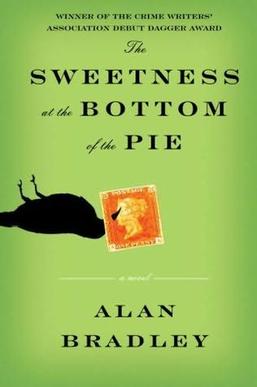
The Sweetness at the Bottom of the Pie (Alan Bradley)

I'd like to say at this point that my summer reading has gotten off to a good start.  I've been out of school for about a week (give or take a day or two) and I'm already posting about my second summer mystery!  This one is a bit of a jump from the Father Brown mysteries.  Now, instead of a Roman Catholic priest, we have an aspiring chemist, who just happens to be an eleven year old girl with a passion for poison.  Her name is Flavia de Luce.

Life has not been super-kind to Flavia.  Her father has been emotionally distant since the death of her mother when Flavia was a baby, and her two older sisters are always ganging up on her.  (Not that she can't handle herself.  She gets back at them on more than one occasion).  Things start to get interesting for Miss Flavia, however, when a dead bird turns up on the doorstep with a postage stamp pinned to its beak.  This is followed up the next morning when Flavia finds a dying man in the cucumber patch.  But, what starts off as simply fascinating soon becomes personal when Flavia's father is charged with the murder.  Soon, she finds much more than she bargained for in this exciting story.


I have never been much for cozy mysteries, which is why I thought this would be a great summer reading assignment.  As far as I'm concerned, this topic is about as close to virgin soil as I'm going to get when it comes to reading materials.  Sure, I've read mysteries, but not many.  Perhaps I don't because of a couple simple reasons.  (1.) I hate being able to guess who the murderer is right off the bat.  Do I try and guess anyway?  Of course!  Half the fun of reading a mystery is to figure out who the murderer is, what's the motive, and how was the murder committed.  A lot of times I can guess.  And that's annoying.  (2.) Or, the murderer will be something stupid.  "I killed Mrs. Patterson because I wanted to be the head of the bake-sale committee for this year's PTA."  Huh.  Not much of a high-stakes crime here.  Just a stupid one.  This book avoided both of these pitfalls.  Not only was I not able to guess who the murderer was, but the motive and method were thought-out.  It was very good!

Another of this book's positive characteristics was the detective.  For such a grim sort of character (an 11 year old with a passion for poison!!) Flavia was incredibly likeable.   She was funny, candid, and fascinating.  Sometimes, when writing a mature child character, he or she does not sound realistic.  Mostly, you get the image of an adult when reading, or worse, the character either sounds creepy or fakey-fake fake.  So, of course, I was vaguely concerned that Flavia would turn out the same way.  I was pleasantly surprised.  She's smart, certainly.  In fact, remembering the awful struggle that high school chemistry was for me, I would even venture to say that Flavia might be smarter than most adults my age (and probably smarter than me).  But, at the same time, there is no doubt that she's a child.  She's simply a beautifully written, three-dimensional character.  Clever, but naive, Flavia is an impressive sample of a well-written character, and I can't get enough of her!  Good news is that there are at least six books out, and a seventh on the way for 2015.

On a bit of a tangent, I know I had some great supplementary materials for Father Brown.  Coincidentally, while there are no movies about Flavia out yet (as far as I'm aware), there is a huge stack of chemistry-related books lying on the floor of my bedroom.  I'll hopefully be posting about those soon.  It's entirely a coincidence that I have those.  I didn't even make the connection about Flavia being a chemist until early this morning.  Oh, and according to IMDB, there's a possible TV series in the works, as well.

Wednesday, May 14, 2014

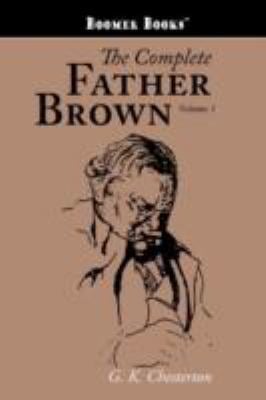
The Complete Father Brown, Part 1 (GK Chesterton)

And so begins the Summer Reading 2014 collection!  And our first detective is one Father Brown, a Roman Catholic priest with a knack for solving all the mysteries that he has the misfortune to encounter.  This collection, written by a personal favorite of mine, GK Chesterton, has been on my To-Read list for years.  It's only now that I'm getting around to picking them up.


The collection I read was actually comprised of two Father Brown books: The Innocence of Father Brown and The Wisdom of Father Brown.  Before this, I had only read one of the stories before: The Blue Cross.  It was a great story about the French detective Valentin pursuing the master criminal Flambeau, who happens to be pursuing the mild-mannered, doddering priest Father Brown.  I highly recommend checking it out, just for a sample of these sorts of stories.  You can actually read it online here.  (Project Guttenberg is great for reading old books in the public domain, such as this one!)

What I liked the best about this detective is just how sweet and innocent he is.  Father Brown is not your typical action hero.  He's too short to scale walls, and not strong enough to fight off any desperate criminals.  But, he's full of common sense and goodwill.  He's more concerned with saving the soul of the perpetrator than he is with seeing that justice is done.  But, at the same time, he's not going around preaching and emphasizing an overly Catholic attitude.  This is not one of those books that is made to be obviously Christian to the point where everyone but the most zealous of believers are ready to put the book down.  For the most part, he most Catholic thing about him is the fact that he's a priest.  These are genuinely enjoyable cozy mysteries with surprising twists.  My personal favorite was probably The Hammer of God, which is about the mysterious death of the local minister's womanizing, hedonistic brother who is discovered dead in the center of town with his skull completely smashed like a pumpkin.  The murder weapon is a small hammer--too small to have done that kind of damage--which belongs to the cuckolded blacksmith whose wife was having an affair with the victim.

In an attempt to expand the scope of Ramblings, I'll also be including any supplementary material concerning the detectives that I pick up over the course of my summer.  In the case of Father Brown, there is actually a lot more than you would expect, including several audio adaptations (at least one of which is not so much an audiobook as a "radio program" or "audio play" retelling), and a couple of TV series.  I've been watching and greatly enjoying the one starring Kenneth More as the little priest.  While he appears to be a bit older than suggested in the books, he does an absolutely wonderful job, and I highly recommend it!  I'll be posting more about that later, though, when I have the chance to finish the series.

So, in the meantime, just sit back and prepare for more mysteries and mayhem to come.  Is there a mystery series you have particuarly enjoyed?  Share it in the comments below!  Unless something changes (and you never know!!) I'll be posting about the Flavia de Luce series next, with the first book The Sweetness at the Bottom of the Pie.  (And in case you were wondering, yes, I would also like to eventually read The Complete Father Brown, Part 2!)

Saturday, February 22, 2014

The Last Temptation (Neil Gaiman)

I promise that this will be my last graphic novel book review for a little while.  I'm sure you guys are getting sick of them.  But, I just had to go on a little mini-rant about how awesome this book was.  First, it was written by Neil Gaiman, who writes nothing but awesome, except for his Sandman series, and possibly Stardust.  I don't remember much of that, except I didn't like it.  Second, it includes Alice Cooper!  That's right!  The Last Temptation was actually written in conjunction with Alice Cooper's concept album of the same name.  So, yay!

The story is about Steven, a high school kid who follows a creepy showman (who looks a hell of a lot like ol' Alice) into an abandoned theatre for a once-in-a-lifetime performance.  While there, the showman invites him to join the show...permanently.  And, being the charming master of dark creepy things that he is, the showman allows him some time to think things through.  He offers him a life of fun and excitement, free from pain and responsibility and growing old.  And in return, all Steven needs to give up is his potential.
It's a creepy story, certainly.  But, it was fun to read.  And it combined one of my favorite authors and one of my favorite musicians.  I never thought I'd pick up a Neil Gaiman book with Alice Cooper in it.  And I found it completely by accident, as I was checking in books at work. 

The version I was reading was in black and white, but there is apparently also a color version out.  I'll be trying to get my hands on a copy of that next.

The best part for me, however, was the concept album, The Last Temptation, that went along with the book.  I read the book first, then got the CD through inter-library loan (ILL).  I won't go into details here, but the music was WONDERFUL.  Gaiman suggests pairing the two together for the ultimate reading experience, but by the time I figured out that there was an album, I was already too committed to "starting this book today, dammit!"  
(Sometimes, I fear I take after Lost in Space's Dr. Smith.  "Smith!  Don't eat that!  You don't even know what it is!"  "Oh, nonsense, it looks delicious.  And if it were poison, I evolved palate would be able to detect it".  Or, in my case: "Em!  Don't read that yet!  You have to wait until the CD comes." "Oh, nonsense, this book looks awesome!  It won't be a big deal at all."  And maybe it was.  I won't really know.  If you do the "correct" thing and pair the two up, please let me know how it affected your reading experience.)

Overall, it was a fun book.  Was it the greatest graphic novel I've read?  No.  But, it was fun.  And that's really what's important to me.  Yeah, sometimes I felt it was a bit hokey.  And the "Lost in America" sequence dragged a bit, because the dialogue was straight from the song lyrics.  Nothing wrong with that, per se, but have you ever heard someone "say" song lyrics?  It just doesn't sound right.  And it doesn't read right, either.  But, the story was cool in that sort of vaguely creepy atmospheric way.  It reminded me of the time I tried to read Something Wicked This Way Comes, and then had to return it to the library because I ran out of renewals.  Or even of the feeling in the air at the end of September to late October when you sit outside in a lawn chair watching the leaves swirl around while reading books about vampires and other bogeymen.  Keeping that in mind, I plan on picking it up again this October.  Hopefully it'll be a fun read.